There is a moment that, as content creators, we all dread. You have something genuinely important to say. You publish it. And it disappears into the digital void.
Not because the idea was weak. Because your audience has learned, without ever deciding to, that your content is background noise. You trained them to ignore you.
The Clock Is Consistent. The Content Should Be Worth It.
Consistency matters. But it is about showing up on a schedule you can sustain, not filling every slot in a content calendar for its own sake. I love a colour-coordinated content plan. You cannot rely on instinct and a few Post-it notes to function day to day.
But the danger is that our tools are fooling us. A celebratory animation when you hit publish does not mean you published something worth reading. Blog posts that restate the obvious under a confident headline. All of it in the name of staying visible, staying in the algorithm.
What it actually does is spend down the one resource you cannot replenish: your audience’s attention.
What actually happens when you post too much
John Sweller’s cognitive load theory established this clearly. When the volume of incoming information exceeds what the brain can handle, it does not try harder. It filters faster. Daniel Kahneman’s work on System 1 thinking goes further: most decisions about what to read and what to ignore operate on autopilot, driven by pattern recognition. If your content has repeatedly failed to reward attention, the brain stops offering it the chance. Kahneman’s talks on this are on YouTube and worth an hour of anyone’s time.
You have not just wasted that post. You have wasted the important one.
The old playbook is broken and the numbers prove it
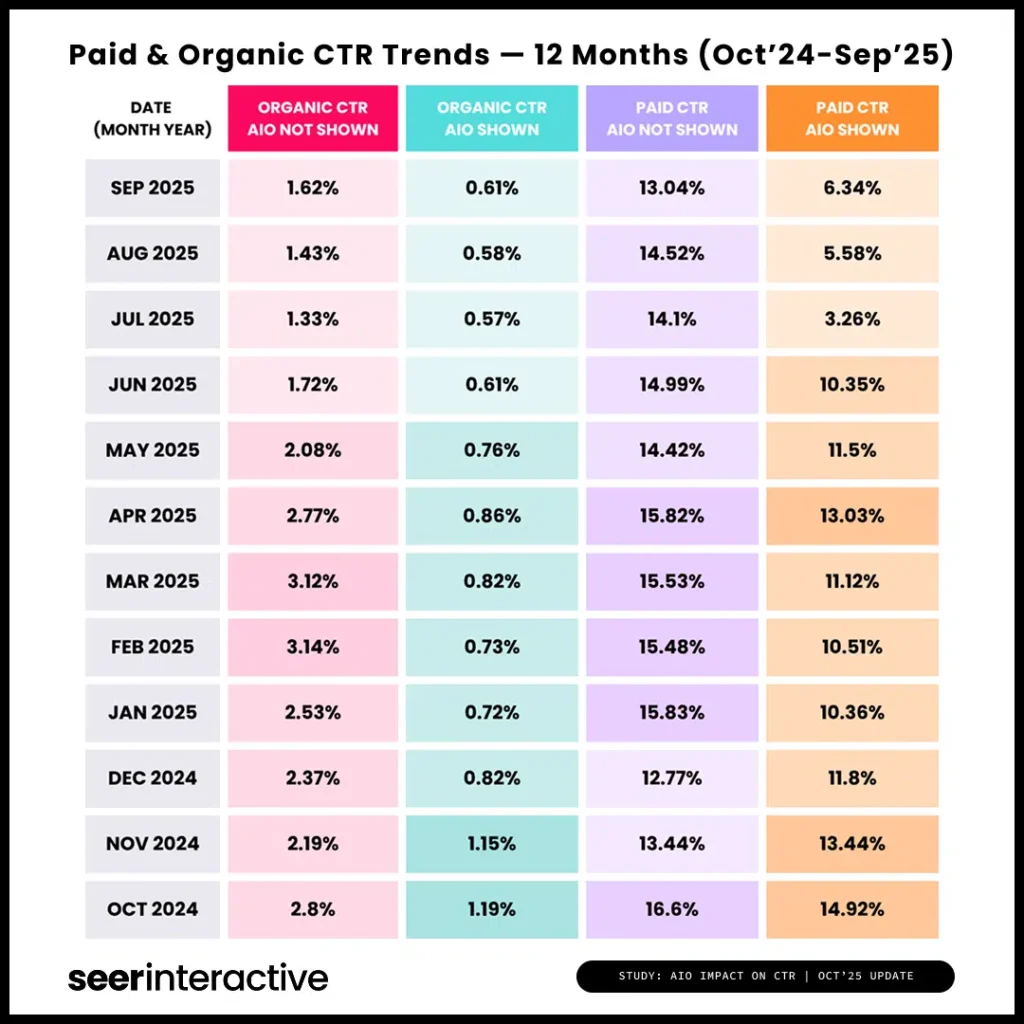
Even sitting in the top three on Google, conversion rates are falling. A September 2025 study by Seer Interactive tracked 25 million search impressions and found organic click-through rates dropped 61% on queries featuring AI Overviews. Paid CTR fell 68%. Even queries without AI Overviews saw a 41% decline. The strategies that worked three years ago are delivering less for the same spend, and most businesses are still running them.
Customer behaviour has shifted. People are more cautious, more considered, and slower to commit. The seven touchpoint rule has never been more relevant, but AI is quietly bypassing the traditional channels those touchpoints relied on. People are going to ChatGPT and Perplexity before they come to you. If your content is thin or generic, it will not survive that filter. And if it says nothing a language model could not produce itself, it will be ignored before it even reaches a person.
Lazy content is more dangerous than it has ever been. People want problems solved, not slogans. They want depth and specificity before they give you their time, let alone their money. Earning trust at every touchpoint is now the only reliable path to conversion.
The simplest content wins when it means something
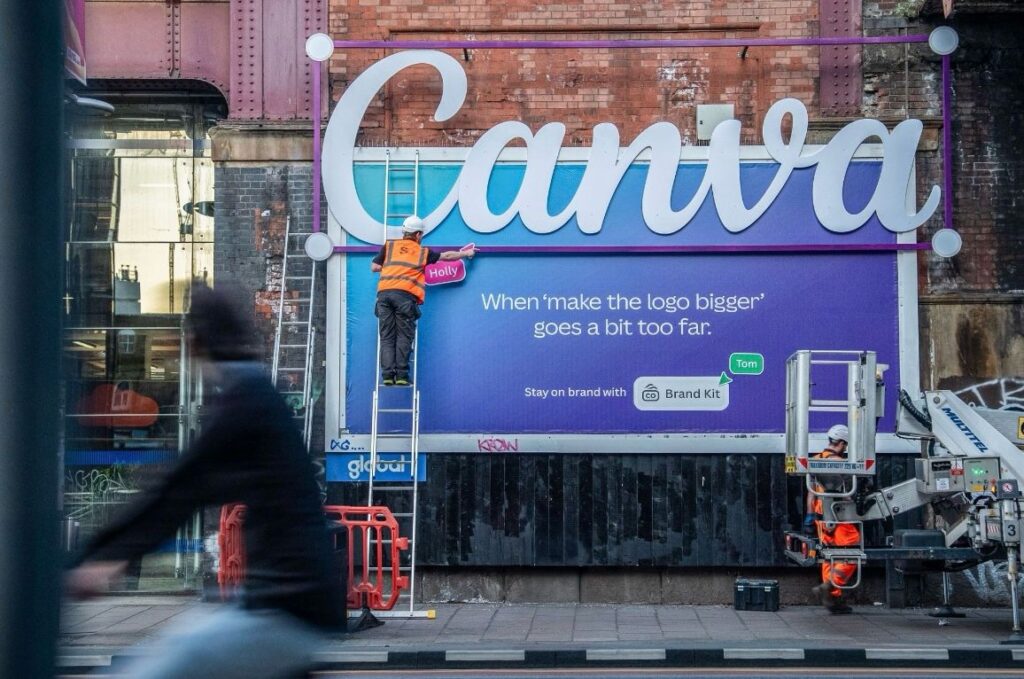
That does not mean every piece of content has to be an essay with carefully crafted gravitas. Canva’s “Can You Make the Logo Bigger?” campaign, billboards speaking directly to designers, landed because it said something true about a shared experience rather than promoting a feature. The audience felt recognised. That is what a full trust account buys you: when you need to say something, people are already leaning in.
Every piece of content is either a deposit or a withdrawal. A post that teaches something or challenges an assumption is a deposit. A post that exists because it is Tuesday is a withdrawal. Most businesses have no idea their account is overdrawn until the content that matters goes silent.
Who Is This Actually For
Is your content actually interesting to the people you are trying to reach? Most businesses produce content that matters to them and assume that importance transfers. It does not.
The test is simple: why would someone with no investment in this business find this worth their time? If you cannot answer that clearly, it is not ready. A pricing change becomes a piece about how the industry is shifting. A new service becomes a post about the problem it solves. The information is the same. The frame is everything. Seth Godin made this case better than anyone in his TED talk “How to Get Your Ideas to Spread.” The purple cow is not about being outrageous. It is about being worth remarking about.
AI Gave You a Safety Blanket. Not a Strategy.

AI writing tools removed the friction that used to slow things down. The blank page, the hard thinking, the editing pass where you ask whether this is actually worth saying. That friction was doing important work.
We have not used the saved time to think more carefully. We have used it to publish more. The result is content that is technically competent and intellectually empty. The distinction worth holding is between an artisan and a mass manufacturer. AI amplifies whatever thinking you bring to it. Use it with nothing and you get polished nothing.
Bad content is not just a marketing issue
Marketing gets called the colouring in department. When leads are not coming in the blame lands there first. So the response is to post more. But volume does not fix a structural problem.
Good content is everybody’s responsibility, not just marketing’s. If what gets published does not reflect the business compellingly, the question should not only be what marketing did wrong. It should be what marketing was given to work with. A marketeer cannot invent depth where none has been provided. When information arrives late the content shows the strain. It begins to smell. And the audience notices before anyone inside the business does.
If content is king, data is queen
Analytics used honestly will tell you what is working. Not likes or impressions. Which posts made someone visit your site, start a conversation, or reach out? Take the last three months and find the pieces that generated real engagement. Ask what they had in common. The gap between those and everything else you published is your content strategy.
When you forget why you started
At some point while writing this I caught myself using the phrase “content creator” and stopped. When did that become the identity? Not strategist, not someone with genuine expertise. A neutral descriptor for someone whose primary relationship with their audience is production.
Have we become part of the problem?
Content burnout is not running out of ideas. It is losing the thread of why you started. When the work does not land the temptation is to post more, optimise more, borrow from what is working for other people. That is where the obsession takes hold. You stop asking whether the work is good and start asking why it is not being seen.
Reigniting the passion is less about technique and more about permission. Permission to write about what genuinely interests you. Permission to let a week go by because nothing you have is ready.
That is what you are protecting when you choose quality over volume. Not a metric. A reason to keep going.
Further reading
Attention and psychology
Daniel Kahneman on System 1 and System 2 thinking — search “Kahneman Thinking Fast and Slow” on YouTube
Seth Godin, “How to Get Your Ideas to Spread” — TED Talk, 17 minutes: ted.com/talks/seth_godin_how_to_get_your_ideas_to_spread
The data behind the shift
Seer Interactive, “AIO Impact on Google CTR: September 2025 Update” — seerinteractive.com
2025 Organic Traffic Crisis: Zero-Click and AI Impact Report — thedigitalbloom.com
Content strategy and brand
Canva “Can You Make the Logo Bigger?” campaign — contentpen.ai/blog/recent-innovative-marketing-examples