There is a word we use constantly and carelessly, yet it carries strange weight. That word is cute.
We say it about babies and puppies, a quirky café, a friend’s new partner, a colleague’s business idea. And sometimes, when we say it, we mean something slightly cruel.
A Compliment With a Sting
“You’re cute.” Depending on tone and who’s saying it, this can be the warmest thing you’ve heard all week, or a quiet, deniable dismissal.
Tell someone their argument is cute and you haven’t agreed with them. You’ve patted them on the head. The word performs a diminishment that’s almost impossible to call out, because the speaker can always retreat behind innocence. I meant it as a compliment.
Cute carries the plausible deniability of affection. A truly beautiful idea, a genuinely threatening argument, a person with real authority — these things are rarely described as cute. Cute implies a ceiling: charm but not weight, appeal but not power.
Women in particular know the experience of being called cute when they wanted to be called brilliant, or right. It’s a way of keeping someone in a smaller box.
Manufactured, Not Born
Beautiful is something that happens to you. Cute is something you can engineer.
Cute is frequently performed: the tilted head, the wide eyes, the carefully chosen softness. Cuteness tends toward the round, the small, the simplified. Cute things often look like they’ve been designed to be cute. Because they have been.
The rounded edges of a cartoon character, the oversized eyes of a plush toy, the pastel palette — these are calculated triggers. The features we associate with infant faces activate caregiving instincts in the brain. Marketers have known this intuitively for decades. Now they know it neurologically.
Cute works. Whether we like it or not.
The Compulsive Purchase Problem
Walk into any gift shop or online marketplace at three in the morning and you’ll find an economy built on cute. The ceramic pot shaped like a cloud. The notebook with the sleepy frog. The thing you did not need and now absolutely own.
We buy cute things because they produce a small, warm, uncomplicated feeling — frictionless delight in a world that is frequently overwhelming. This isn’t necessarily bad. But we are, in a very real sense, being managed.
Temu has taken this further than anyone. The app wraps its entire shopping experience in cute gamification: spin-to-win wheels, mini-games called Fishland and Coin Spin, rewards, countdowns, jackpot prizes. The interface looks closer to Candy Crush than a shop. But underneath the playfulness sits serious algorithmic machinery — tracking what you linger on, what you add to your cart but don’t buy, what you come back to. The cute is the surface. The personalisation is the trap. Every scroll serves you something slightly more tailored than the last, so the eye candy keeps hitting. Users spend an average of 22 minutes a day on Temu — double the time they spend on Amazon. Research found that over half of Temu users have made unplanned purchases directly because of its gamified features. Cute has been industrialised into a psychological loop, matched to your specific weaknesses, and it works.
There is a reason we lose hours to TikTok watching cats dance, dogs do tricks, and influencers made up in the wide-eyed, soft-skinned aesthetic of anime characters. The kawaii beauty trend — dewy skin, big lashes, small features, an expression of gentle blankness — is not just a look. It is a signal. It says: I am harmless, I am delightful, I am safe to watch. Cute content asks nothing of you. It produces a dopamine hit with no friction, no challenge, no discomfort. The algorithm knows this and feeds it back without mercy. We are not stumbling onto these videos. We are being served them because cute retains attention, and attention is the product. No wonder brands will do almost anything to get a piece of that — and no wonder so many of them get it badly wrong.
Japan and the Cult of Kawaii
No conversation about cute is complete without Japan, which has done something the rest of the world hasn’t: it took cute seriously.
Kawaii — roughly, adorable or loveable — is not a niche subculture. It runs through fashion, design, advertising, and public life. Hello Kitty is a multibillion-dollar empire. Japanese cities have official mascots, yuru-chara, deliberately soft and endearing. Police forces and train companies have cute mascots.
Western culture has a lingering sense that growing up means leaving cute behind. Japan rejected this. Kawaii is worn openly, by adults, without irony. Yes, we like soft things. So what?
Cute as Irony, Cute as Armour
Some of the most interesting uses of cute are the ones that use it as a Trojan horse.
The Barbie movie is the defining recent example. Greta Gerwig’s 2023 film wrapped a sharp feminist critique inside aggressively cute packaging: hot pink, plastic dreamhouses, relentless cheerfulness. It worked because the audience understood the game — they could wear pink to the cinema, enjoy the spectacle, and absorb the commentary, all at once. Mattel reported a 27% jump in doll sales in the quarter after release. The cute was the point. So was everything underneath it.
Anime has been doing this for decades, often more brutally. Puella Magi Madoka Magica looked like any other cheerful magical girl show. The producers deliberately promoted it using cute character designs while keeping the actual story secret. What audiences got was an existential nightmare — cosmic horror and irreversible loss disguised as a children’s fantasy. Made in Abyss works the same way: its marketing materials look like a children’s adventure; the show contains some of the most disturbing content in recent anime.
The cute aesthetic isn’t decoration. It’s a weapon. The softness lowers your guard, and that’s not a weakness of cute — it’s its deepest power.

When Cute Works
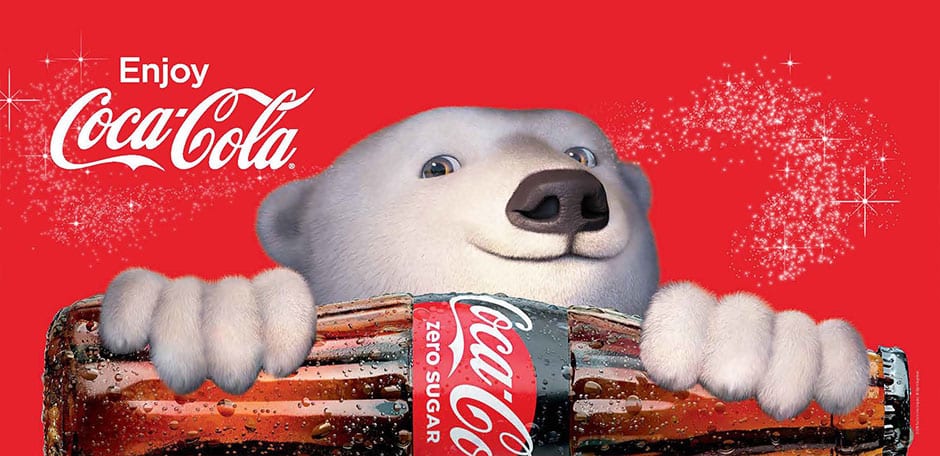
Coca-Cola’s polar bears took a product that is essentially sugar water and wrapped it in warmth and family. The campaign ran for over two decades. Nobody doubted Coke’s brand because of a polar bear — cute and authority weren’t in competition, because Coke wasn’t selling authority. It was selling pleasure.
Innocent Drinks built a personality around something harder to pin down: whimsical rather than adorable, witty rather than warm. They made people read the back of a smoothie carton, which is a minor miracle.
Duolingo is the sharpest current example. The brand took its green owl mascot, Duo, and leaned into the memes users were already making — jokes about Duo being menacing, obsessive. He appeared in videos accosting people in car parks, declared a crush on Dua Lipa, was killed off in February 2025 and resurrected after users accumulated 50 billion XP to save him, a stunt that generated more social media mentions than every Super Bowl ad that night. Duolingo now has more TikTok followers than Nike, McDonald’s, and Disney.
Cute was the foundation, not the whole structure. The cuteness was the permission slip. The chaos was what people actually shared.
When Cute Goes Wrong
Cute is not a universal tool. For some brands it is actively dangerous.
Harley-Davidson sells a fantasy of freedom, rebellion, and raw mechanical power. Any move toward cute — a rounded logo, a friendly mascot, a pastel colourway — would read as betrayal. You do not mess with the eagle.
IBM’s authority rests on seriousness. When it has flirted with warmer branding, the reaction from enterprise clients is quiet unease: this is not what we hired you for.
Jaguar’s 2024 rebrand is the clearest cautionary tale. The leaping cat logo was retired for a soft, rounded wordmark and pastel visuals, with no actual cars in the campaign. Designers inside the company reportedly described the new logo as “too rounded and playful.” The public reaction was brutal — European sales collapsed in 2025, and the creative chief was escorted out. Cute and Jaguar are a contradiction in terms. The brand had traded on predatory elegance for nearly a century. Softening it didn’t feel modern. It felt like a different animal entirely.
The question worth asking before reaching for rounded corners and warm palettes is simple: what is my customer actually buying? Comfort, joy, play — cute is a superpower. Safety, authority, performance — cute might be the most expensive mistake you make.
The Verdict
Cute can be wielded as condescension, used to manipulate spending, and deployed to flatten the complex into the palatable.
But cute is also just fun. A city bus with a cartoon mascot, a mug shaped like a bear — these things make people smile, and there’s nothing fraudulent about that.
Cute contains multitudes: a weapon, a sales technique, and a genuine source of joy, sometimes all at once. Japan just had the confidence to lean into the last one.
Cute, at its best, is permission to find the world a little bit lovely.
Even if that’s a little bit dangerous.
Further Reading
On Temu’s psychological tactics A readable Psychology Today breakdown of exactly how Temu’s gamification and scarcity mechanics work on the brain, with academic references. psychologytoday.com/us/blog/the-social-consumer/202404/how-temu-uses-psychological-hacks-to-encourage-overspending
On the Jaguar rebrand Two good pieces — one from Creative Boom on the design lessons, one from Good Story on the brand identity failure. creativeboom.com/insight/why-the-jaguar-rebrand-failed-and-what-it-can-teach-us
https://goodstory.substack.com/p/jaguar-rebrand-fail
On Duolingo’s mascot strategy The full Adweek feature on how Duo the owl was built into a cultural phenomenon. adweek.com/brand-marketing/duolingo-duo-owl-marketing-strategy